
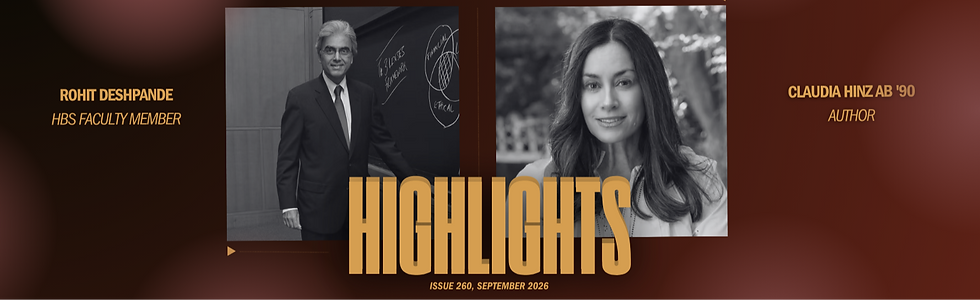
Harvardwood HIGHLIGHTS - June 2026
Updated: Oct 2

In this issue:
MESSAGE FROM HARVARDWOOD
NEWS
Feature Writing Intensive Applications Open
HAA Election Results
Announcing the Winners of the 2026-2027 Harvardwood Artist Launch Fellowship and
Harvardwood Emerging Visual Artist Fellowship
Applications for the Jonathan Sethna Harvardwood LGBTQ+ Fellowship are now open!
Featured Job: Music Central Assistant
FEATURES
Harvardwood Profile: Robert Carlock AB ’95 (producer, screenwriter)
Industry News
Exclusive Q&A with Madeline Dorroh AB '19 (voice actor)
CALENDAR & NOTES
Weekly Freewriting Sessions (Virtual)
Harvardwood Reunion Meet-Up (Cambridge, MA)
Harvardwood & Echo Lake Pride Party (Los Angeles, CA)
Last Month at Harvardwood
Want to submit your success(es) to Harvardwood HIGHLIGHTS? Do so by posting here!
Hark!
Feature Writing Intensive Applications are open! HAA Election Results are out! And the HALF and HEVAF winners have won! Much news, much news, but one cannot forget to apply to the Jonathan Sethna Harvardwood LGBTQ+ Fellowship!
We are still doing our Weekly Freewriting Sessions, and also we're going to do a Reunion Meetup in Cambridge just to mess with those kooky Mass-heads. For the lovable LA-heads, come to our Harvardwood & Echo Lake Pride Party!
As always, if you have an idea for an event or programming, please tell us about it here. If you have an announcement about your work or someone else's, please share it here (members) and it will appear in our Weekly and/or next HIGHLIGHTS issue.
Best wishes,
Grace Shi
Operations and Communications
Feature Writing Intensive Applications Open!
Mark your calendar— the Harvardwood Feature Writing Intensive (FWI) brings together Harvardwood members for 10-12 weeks of focused writing, support, and accountability—whether you're working on a first draft, revising toward a polished script, or aiming for another milestone.
FWI is a module-based peer writing program. Modules meet for 3 hours each week for the duration of the intensive. This program uses peer review, guest speakers, and workshops to foster a motivating and supportive environment.
Only Full Members are eligible to apply, unless a Friend of Harvardwood is writing partners with a Full Member, in which case the writing team can apply jointly.
HAA Election Results
Congratulations to the Harvardwood members elected to serve the Harvard community in various capacities in the recent elections!
A special congratulations to Clive Chang, M.B.A. ’11, on his election to Harvard's Board of Overseers. As President and CEO of YoungArts, Clive has dedicated his career to supporting and elevating the next generation of artists and creative leaders. We look forward to the perspective and leadership he will bring to one of Harvard's most important governing bodies.
Congratulations as well to newly elected Harvard Alumni Association Directors:
Mia Esther Alpert ’99 — founder and president emerita of Harvardwood, whose longstanding commitment to strengthening the Harvard creative community has helped connect and support countless alumni across the entertainment industry.
Allison Charney Epstein ’89 — acclaimed opera singer and producer, whose distinguished career exemplifies the power of the arts to inspire, connect, and enrich communities.
Jimmy Biblarz ’14, J.D. ’21, Ph.D. ’23 — attorney, scholar, and dedicated alumnus whose remarkable breadth of academic and professional experience reflects the spirit of service and lifelong learning that defines Harvard.
Thank you for your willingness to give your time, talent, and leadership in service to Harvard and its alumni community. We wish you every success in your new roles and look forward to the impact you will make in the years ahead.
Congratulations again to all of the newly elected Overseers and HAA Directors.
Announcing the Winners of the 2026-2027 Harvardwood Artist Launch Fellowship and Harvardwood Emerging Visual Artist Fellowship
Harvardwood is thrilled to present the winners of this year’s HALF and HEVAF fellowships.

Adrienne Chan AB '25 is a choreographer and dancer based in New York City and originally from Cleveland, Ohio. Blending the language of contemporary ballet with sociological themes and playful, earnest theatricality, her work investigates dance as a narrative medium. Her work has been performed by companies such as the Harvard Ballet Company, the Columbia Ballet Collaborative, and City Ballet of Cleveland. Adrienne is a dancer at the Brooklyn Ballet and an instructor at Chrystie Street Ballet Academy. For her artistic and academic work, Adrienne has received the E. John Busser Scholarship and the Harvard Office for the Arts’ Radcliffe Doris Cohen Levi Prize. She recently graduated from Harvard University, where she studied Sociology and Theater, Dance, and Media. Website: adrienne-chan.com
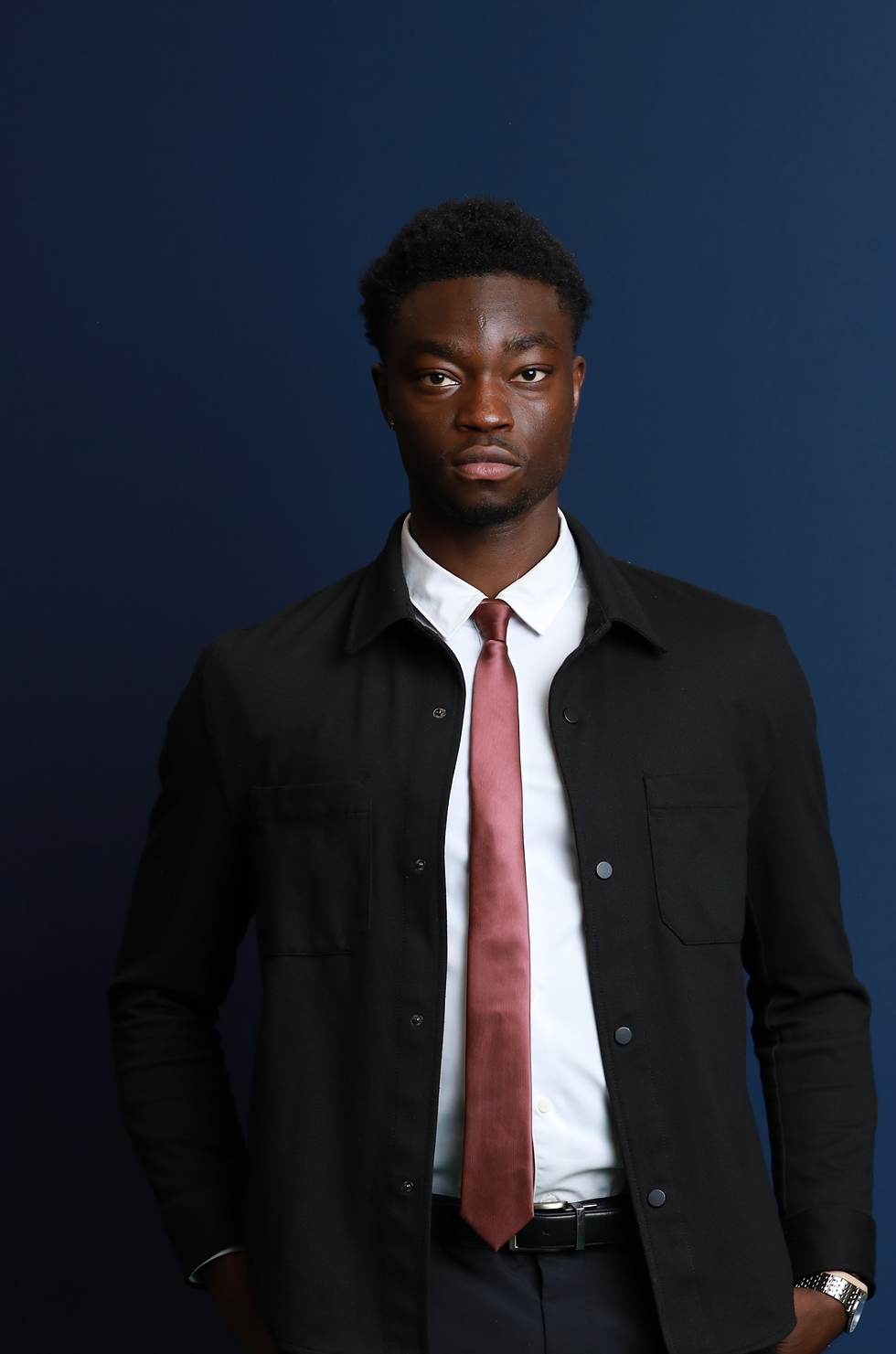
Jaeschel Acheampong AB '24, is a multidisciplinary artist whose work primarily lands at the intersections between music, film and world building. As an engineer by trade, he approaches his work with both structural rigor and creative intuition, building systems that allow ideas to expand and grow rather than remaining confined to a single format.
Often, Jaeschel explores identity, cultural duality and juxtaposition. Pulling from African voices and perspectives then reimaging them with a different lens. Previous projects have been translated across many different forms: from written compositions for string quartets expanded to short films, to research papers translated into albums.
Alongside his independent work, he has collaborated with a range of brands; creative directing fashion campaigns and shaping visual and sonic identities across mediums. He has also worked in athletic design with companies such as Adidas and presented his work through live performances that translate his compositions into immersive, physical experiences. Across all lanes, his work reflects his broader methodology where each piece acts as a foundation for future work rather than a standalone piece.
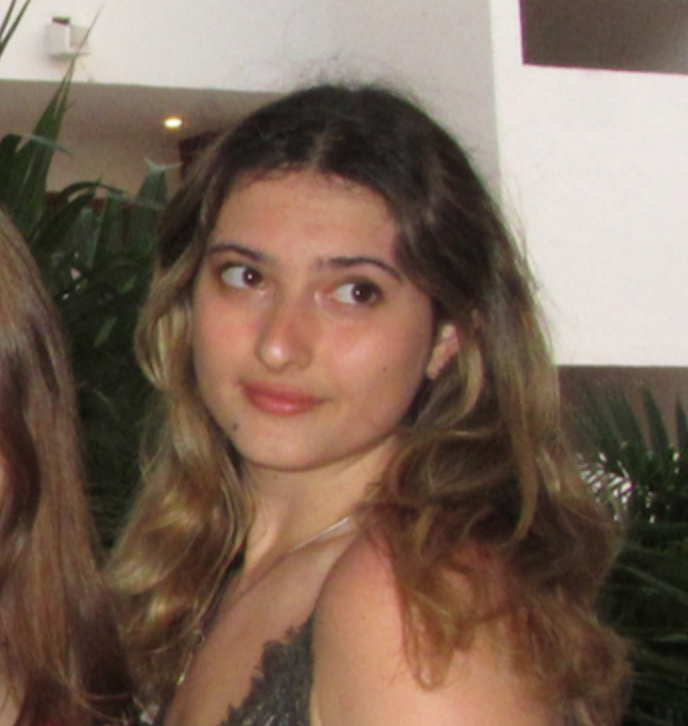
Dylan Ragas AB ‘26 is a visual artist whose work investigates how mental health, queerness, and childhood shape what it means to be present in the early years of our lives. They are currently a senior at the college, concentrating in English with a secondary in Art, Film, and Visual Studies. They work with a wide range of media, incorporating painting, drawing, collage, and digital illustration practices. Their work has appeared in The Harvard Advocate, The Harvard Undergraduate Art Journal, and the LBIF’s 40 Under 40 Exhibition, selected by Whitney curator Jennie Goldstein. They grew up in Philadelphia and love it dearly.
As the 2025-2026 Fellows close out their year, here is what they’ve accomplished:
Carlos Agredano AB '20 (HEVAF)
The Harvardwood Fellowship granted me the time and funds to develop Gregory Ain Publication Subscriptions, a collection of left-wing and socialist publications that Gregory Ain was subscribed to during the period of surveillance on him by the FBI. The publications were directly pulled from his FBI file which I was granted access to through a FOIA (Freedom of Information Act) request. While the project seemed relatively straightforward, making over 150 unique books proved to be quite the challenge. First, I had to gather over 15 years worth of publications like The Daily Compass, The National Guardian, The Daily Worker, and the Bulletin of Atomic Scientists through a variety of different means. Some were easily accessible on Socialist publication archives like the Marxist Internet Archive or through institutional paywalls. My biggest challenge was finding The Daily Compass at the New York Public Library System and scanning over 12 reels of microfilm directly onto my computer.
The project took over 4 months, collecting over 60,000 pages worth of publications, consulting with various bookmakers and printers across the country, and building the structure that would house them. Ultimately I went with a printer in Irvine, CA to reduce the shipping costs of the massive project. Each book is color coded to correspond to a specific publication.
In addition to compiling this massive amount of data, I created a “bootlegged” Eames shelf to hold the books during their display. The reasoning for this has to do with Ain’s history with working with Charles and Ray Eames in the early 1940s. Ain was the head of the plywood division and the Evans Product Company, the precursor to the Eames Studio. Here, Ain developed a plywood splint that was used during the second World War and would eventually inform the design language of the Eames studio. When Charles Eames accepted a solo exhibition at MoMA in 1950, he did not credit nor invite Ain and other collaborators to participate with him. From that moment on, Ain decided to never speak to the Eames ever again and considered them some of the lowliest people he has ever known. I felt like it was important to think about Ain’s mission to be socially inclusive not only in his housing projects but also in how he collaborated with his peers.
Another work that the Harvardwood Fellowship allowed me to develop was research on the Santa Monica Airport, which has been a highly contested site for decades. The airport will be decommissioned in 2028 thanks to a city-wide vote that considered it a major polluter of the Santa Monica and Mar Vista area. The city agreed to build a public park in the site of the airport, with some contingencies pushing for affordable housing; however, there is a group of homeowner associations pushing back against the construction of affordable housing. Santa Monica Northeast Neighbors have organized to delay the closure of the Santa Monica Airport, thereby effectively postponing state-mandated Executive Order N-06-19, which requires that excess public lands be repurposed for affordable housing development. The rhetoric has shifted from explicit covenants to procedural delay and from exclusion by law to exclusion by loophole. Yet the underlying fears remain the same: anxieties about density, diversity, and the redistribution of privilege.
In response to this research I developed two artworks: Santa Monica Airport Fuel Spill Kit, a set of industrial containment tools packaged in a high-visibility drum based on protocol from the Santa Monica Airport. Designed to neutralize the threat of oil and fuel spills, these objects are ubiquitous in highly toxic work areas; and Unbuilt (Community Homes Cooperative), a poster installed at the entrance of the Santa Monica Airport that was designed to promote a Gregory Ain designed affordable housing development.
Kiana Rawji AB '23 (HALF)
My Harvardwood Fellowship year has been one of tremendous growth. Above all, it gave me the time and resources to develop my feature script, Adult Children, to its fullest potential, through countless iterations and intensive workshopping that would otherwise not have been possible, bringing it to a place I feel very proud of. Harvardwood was the first organization to believe in my project, and that support opened doors. Over the past year, the work this fellowship made possible led to additional development support from the Canada Council for the Arts, Stowe Story Labs, Cinephilia Productions' Development Workroom, and The Indian Film Festival of LA, where I won the 2025 pitch competition. The fellowship also allowed me to build critical packaging materials and reach key milestones: a polished deck, a pitch video, a table read, and other creative assets. In parallel, I researched and held meetings with over 50 film industry professionals—producers and directors across the US and Canada—gaining invaluable insight into how to position my film for the market. My sessions with my wonderful mentor, Mynette Louie [AB '97], have been especially formative as I think through team-building, producer and EP attachments, funding strategy, and the path to getting a first feature made and seen. Perhaps most valuably, this past year has also taught me about the patience and stamina that independent filmmaking demands. When factors outside your control cause things to stall (i.e. a producer or actor whose schedule won't allow them to read your script for months), you learn to keep building anyway—to create and sustain your own momentum. Before the HALF, I knew that I would make this film. What the fellowship year gave me was the foundation, perspective, and tools to make it well. The hours spent writing, rewriting, meeting with industry professionals, gathering visual references, researching funding pathways, assembling grant applications and pitch materials—all of that has brought me closer to turning my vision into reality, and none of it would have been possible without Harvardwood's generous support. I'm deeply grateful—thank you!
Cory Beizer AB '24 (HALF)
With Harvardwood’s support, I had an epic year. I thru-hiked the 2,650-mile-long Pacific Crest Trail. I went through deserts that gave me a new understanding of wide spaces (I see now why many divine biblical events occurred in the desert), and up passes of snow-covered mountains at sunrise where I saw a shade of dawn blue I will never see again. I met people unlike any I had ever known before. Non-Harvard, non-San Franciscan people. Small town, failure-loving, adrenaline-craving, stupid, unadorned, brilliant, multidimensional, caring, generous, mean, devoted people. Befriending and hiking with and being helped out by these people was what truly expanded me. I hadn’t realized that I had been living in a small, competitive world. The greater world, I found, is simpler. There’s mutual dignity, less performance, an easier ugliness, more faith.
After the hike, I discovered my writing had changed. My sentences were shorter, my thoughts clearer. Wedding sparklers, instead of triumphant fireworks that boasted ephemerality, were “dazzling and optimistic.” My parents, who had never really liked or understood my stories (I could tell), enjoyed my first post-hike story, “Ana.” Their reaction made me realize it was silly to ever write stories that were pretentious. My goal is to create something risky, beautiful, and able to be picked up and enjoyed by most.
In January, I moved to Whitefish, Montana, and began writing a novel about wildfires and the Pacific Crest Trail. I wanted to show the tight-knit model of community I had experienced on the trail, and propose it as a way to move forward through our larger burning world. I wrote 150 pages before I realized the novel was bad. It was too close to my own experience, while still pretending to be “fiction.” Being in that in-between state caused the book to lack the truth of memoir and the possibilities of fiction. So I scrapped it! I focused in on what I was actually interested in writing about—a coming of age boyhood intersecting with ecological disasters—and started a new novel. I am now 200 pages into this one, and it’s much better. There’s blizzards, and crushes, and deer hunting, and schoolyard drama, and a cruise to Antarctica, and betrayals of mothers, and mothers betraying their sons back, and wildfires, and so on. I’ve had several agents express interest (because of my PEN/Dau award and DISQUIET grand prize award), and one already sent me a contract based on the novel’s first 70 pages! I am going to wait and take the book as far as I can before I sign to anyone/start querying. I imagine I’ll be done with the first draft of the book by the end of summer and edit it for a year while I pursue my MFA in Fiction at UMichigan’s Helen Zell Writers’ Program.
This is turning out to be long, but I am really, truly grateful to you all for supporting me. The biggest gift of HALF is time and belief. Over the course of the year, I have gone from wanting to be a writer to being a writer. What a shift. I’ve had time to think about the purpose of storytelling. I’ve doubted that what I’m doing matters. But I’ve come to realize that stories help us live feeling lives. Good stories reject numbness and ignorance, and encourage play, failure, perfection, and connection. That is invaluable. As Amy Tan puts it in her forward to the Best American Short Stories 1999, “[Stories] remind us to distrust absolute truths, to dismiss clichés, to both desire and fear stillness, to see the world freshly from closer up or further away, with a sense of mystery or acceptance, discontent or hope, all the while remembering that there are so many possibilities, and this is only one.” I love writing, I love reading, I love the arts, and I am so honored to be able to write for a whole year.
Camila Sanmiguel Anaya AB '22 (HALF)
At the end of last summer, just before I started grad school, I learned of my cousin Valeria’s unexpected death. I will spend the rest of my life thinking about her. Vale lived a graceful, courageous 30 years. She was a brilliant graphic designer, photographer, and visual artist. Smart and sophisticated, she was an icon to me since childhood. I am thankful for her example of how to be a woman in our Mexican family, how to be the oldest sibling, how to pursue an artistic life. The nine poems I wrote in the first year of my MFA were motivated by my determination to write through this loss. Although these poems feature distinct aspects of my style, they also venture into uncharted territory—attempting to untangle a web of dialogue, characters and timelines, and playing with time and the reader’s sense of its slippage. The workshops I took with Mark Levine and Elizabeth Willis shaped revisions I’ve made to these poems, and my recent mentor meeting with Tracy K. Smith [AB '94] re-invigorated my writing with a newfound sense of clarity, hope, imagination, and joy.
I have been writing intensively this month, with the goal of writing my best work before the school year begins. I plan to continue the typical workshop rhythm of completing one poem per week. I have registered for a month-long online writing retreat in July. I am so thrilled and grateful to dedicate myself to my manuscript this summer, and I am thankful to my mentors for their support and valued wisdom.
Applications for the Jonathan Sethna Harvardwood LGBTQ+ Fellowship are now open!
Application deadline: July 10th, 2026 11:59pm PT
Harvardwood is excited to announce the fourth year of the Jonathan Sethna Harvardwood LGBTQ+ Fellowship for projects that elevate LGBTQ+ characters, themes, and stories by creatives and screenwriters who are Harvard University alumni.
The purpose of the Fellowship is to polish, develop, elevate, and amplify projects for the screen with LGBTQIA+ characters, themes, and stories. The gift, generously donated by Jonathan Sethna (HGSE ’03), will support one Fellow and their project with a grant of $5,000. Additional Fellows may also be awarded. In addition to grant funds, Fellows will receive one-on-one guidance and mentorship from Harvard Alumni that want to empower artists to make the world a better place through their stories.
The Sethna Harvardwood LGBTQ+ Fellow(s) will be announced by August 31, 2024, and the Fellowship will run from September 1, 2025 through August 31, 2026. Applicants may be at any stage of their career, and their chosen project must be a project for the screen (fiction or nonfiction, film or television). However, applicants can hold any relation to the work: writer, director, producer, etc.
Each Fellow will receive additional guidance and assistance through Harvardwood via programs, resources, and access to the wider Harvardwood network during their fellowship year. The Fellowship selection committee is comprised of Harvardwood board members, other industry professionals, and/or Harvard University staff with expertise in various artistic disciplines.
Eligibility
To apply, individuals may identify as a member of the LGBTQIA+ community or ally to the community, as long as the proposed project meets the fellowship goals of uplifting LGBTQIA+ characters/themes/stories. Applicants must be Harvard University alumni in order to complete the application, which must include a resume and an artist statement with a brief description of the envisioned project to be completed or substantially developed during the term of the Fellowship. Applicants should also include a work sample or portfolio.
The finalist round may include a virtual interview. Individuals who have previously been beneficiaries of Harvardwood grants or scholarships or have participated in Harvardwood programs are eligible as long as they meet the other terms of eligibility.
Applicants must be full members of Harvardwood to be eligible for the funding, and applicants with monthly membership must either be members for at least six months prior to or following the application deadline.
Featured Job: Music Central Assistant
Job Description:
As a Music Central Assistant, you’ll be an essential part of the Contemporary Music Team, supporting Music Agents and Assistants with critical tasks. You’ll participate in an immersive 8-week training program designed to provide you with the key skills and knowledge needed to understand and work in the world of live music. This position is ideal for highly organized, data-focused individuals who thrive in fast-paced environments and aspire to one day book tours for clients of their own. Your contributions will empower Music Agents and Assistants and set the stage for potential advancement to a Music Agent’s Assistant role.
Alumni Profile: Robert Carlock AB ’95 (producer, screenwriter)
by Laura Frustaci AB '21

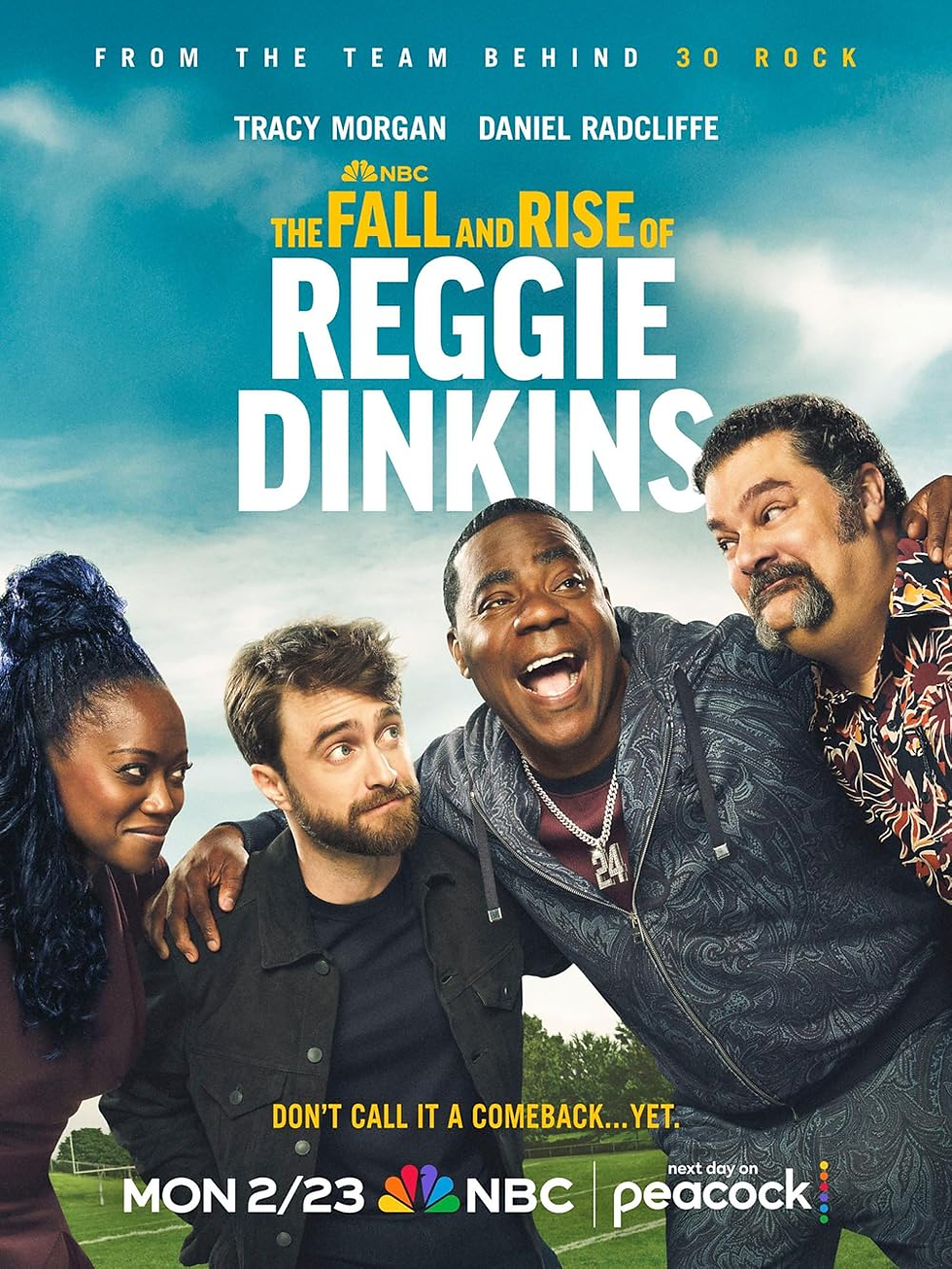
Robert Carlock is the co-creator of the new NBC comedy THE FALL AND RISE OF REGGIE DINKINS, starring Tracy Morgan, Daniel Radcliffe, and Erika Alexander. He was an executive producer of the Emmy-nominated Netflix shows GIRLS5EVA and co-created UNBREAKABLE KIMMY SCHMIDT. He was also the co-creator of NBC's MR. MAYOR as well as the Netflix animated series MULLIGAN. Carlock was an executive producer and co-showrunner of NBC’s 30 ROCK, earning three Emmy Awards for Outstanding Comedy Series and four nominations in the writing category (losing each time to one of his co-workers, usually Tina Fey).
Carlock started his career at THE DANA CARVEY SHOW before joining SATURDAY NIGHT LIVE for five seasons, including a two-year stint as the producer and head writer of Weekend Update. Following SNL, he joined the writing staff at FRIENDS, for its final three seasons, before the show won the Emmy for Outstanding Comedy Series and ended its 10-year run.
Robert Carlock AB ’95 came to Harvard with a love of television and left intending to make a career in it. “I blame The Lampoon. Seeing some of my older friends go on to SATURDAY NIGHT LIVE… and see my other friends go into banking and think, [SNL] seems like more fun!” Robert laughs. Friend and fellow TV writer David Mandel AB '92 recommended Robert to an agent friend at WME at a time when they happened to be really searching for young talent. “I had a real agent, pretty quickly. Which I think was huge for me at that stage in my career, and they continue, of course, to be great.” Robert feels incredibly lucky to have had someone to read his material, and he reaffirms that it’s crucial to be not only doing the writing, but also showing it to people, getting feedback, and continuing to improve. This led to a writing role on THE DANA CARVEY SHOW, a primetime ABC sketch show, where Robert’s office mates were Jon Glazer (“who comedy nerds might know,” he says) and Oscar-winning screenwriter Charlie Kaufman, which was an incredible learning experience. He then landed at SNL, and that’s really where his career kicked off and launched into what it’s become today. A longtime collaborator of Tina Fey, Robert was a showrunner for 30 ROCK, and then the two co-created UNBREAKABLE KIMMY SCHMIDT.
A day in his life can look fairly different, depending on the stage of production. “The best day is the day you wrap,” Robert says, grinning. “Writing is a pain in the ass, right? I think the best part of writing is when you're done and happy with it, except then you have to show it to other people, and they're gonna have opinions. It's personal and painful and vulnerable, no matter what.” And the process of getting from script to shoot is long. Writers move from pitching, to outlining on a dry erase board, to getting notes, and then writing, and then getting more notes, and then rewriting, and then a table read. “At each step, you’re learning things,” Robert states. And there are so many different components to be balancing as a script gets written. Sometimes, a script will get all the way to set and not be just quite right, because of a tonal flaw or missing subtext that’s not translating as well as expected through the actors’ performances, and then writers have to troubleshoot live to see how the issue can be solved.
That problem-solving is part of what makes a good showrunner. Robert notes, “You're constantly trying to put yourself in the shoes of people who do a job that you don't do: a location scout or a set designer, and trying to understand… their limitations, so that you aren't asking for the wrong thing.” Maybe the scene is set on a sunny day, but that makes it harder for a DP. Maybe the costume needs to be special ordered, and the rewrite can’t be shot until it gets shipped back from LA. To move the scenes around, the AD has to get involved. Being able to manage all of this is a key characteristic of a strong showrunner. “You see a lot of writers, talented writers, people who should be running their own shows, but who just want to be doing the stuff on the page. And unfortunately, it's not a novel, it doesn't go to a printing press. It gets put on a rocket ship, and there's all this other stuff that you have to do!” Robert explains. The job doesn’t stop at the end of the page.
In the qualities he looks for in collaborators, commitment to the project is high on the list. “And what that means is more than just a time commitment,” Robert explains. “It's bringing your life into the room. Being willing to share, and being willing to have us use that bad date, or that relationship with a parent, or whatever it is…You want that openness, because that's just such a huge part of the creative process, and then on top of, like, in order for that person to have a life worth sharing, you just want curiosity and a broad range of interest. And the hardest thing to solve for in an interview is, are they actually funny?”
Robert is also quite proud of the relationships he’s built with his colleagues over the years. His new show THE FALL AND RISE OF REGGIE DINKINS with Tracy Morgan, Dan Radcliffe, and Erica Alexander premiered on February 23rd. “The fact that we've worked with Tracy and Dan in the past, Bobby Moynihan is in it, my frequent collaborators Sam Means and Meredith Gardino, Tina's producing, our set designer from 330 ROCK is working on it. That these people still want to work with me, I'm very proud of… that we are able to get these really talented people to come back… I try to build relationships.”
Those relationships have to extend beyond the creative side of things. “I think there's a tendency from writers, if only defensively, to be dismissive of the 'suits', so-called,” Robert explains. But writers have to be willing to take notes from all sides, from “suits” and from test audiences, because it’s important that not only the joke is funny, but the scene works as a whole. “The joke is funny. But maybe the scene is flawed. Maybe… the joke doesn't land for them, because they're not getting the subtext stuff that we try to make text, that we try to make a performance… so let's not just get mad and throw the baby out with the bathwater when we get notes. I disagree with this note on its face, but is it actually getting at something that I'm missing?” Those types of notes can come from even the least expected place, but TV is inherently collaborative, and that’s why it’s essential for writers to be open and willing to accept notes for the sake of improving the final product.
Another piece of advice Robert got early on that he has always valued came from his friend, David Mandel. “He said to me once, early, ‘Just do more than the other people. Be present,’ and I can't remember if he gave that exact piece of practical advice, or if this is something that I just took from it as a natural outgrowth.” Robert continues, "It probably feels obvious to most, especially most Harvard students, I would think, but… I've said this to other younger writers directly, and some of them don't take this advice. If I see your script covered in notes and pitches, I’m like, this person cares about this thing that I care about, cares about their job…if you see someone doing that, they go to the next level.”
When Robert was working on SNL, he recalls, he used to take a hard copy of the week’s script with all of the sketches, and write pitches. He would list 10 joke pitches on a page, and then when he was in the room during the rewrites, he could pitch on them in the moment. The key was being prepared; even if none of his pitches got into the show, that type of effort is recognized and rewarded. Robert adds, “The more funny advice that I once got, and this is from Steve Martin, was, ‘Have money when you're old’.”
And speaking of funny, Robert has this answer to the question of what makes something funny: “They say that comedy equals tragedy plus time. And you can solve what… Distance over rate is time, so comedy is… Tragedy plus distance over rate? That sounds right.”
Industry News
Michael Cohen AB ’99 and the Harvard Yardbirds are featured on the premiere episode of HUMOR ME WITH ROBERT SMIGEL AND FRIENDS. In this episode, the all-Harvard alum a capella group enlist the help of comedian Robert Smigel, SNL cast member Mikey Day, and SNL head writer Streeter Seidell to come up with some funnier banter in between songs. Fun fact: the Yardbirds were founded by Harvardwood co-founder Mia Alpert AB '99 and Harvardwood president Diane Nabatoff AB '78! (YouTube)
Lisa Henson AB ’83 is the executive producer of WOWSABOUT!, a half-hour preschool special that premiered on PBS Kids. An homage to Jim Henson, the special follows Roxy, a free-spirited singing hedgehog, and Ronald, an overprepared, tree-loving pig, as they discover an unlikely friendship and a desire to care for the environment through awe, music, and the natural world around them. (New York Times)
Edward Zwick AB ’74 is the director of ASYMMETRY, an upcoming romantic drama based on Lisa Halliday’s acclaimed 2018 novel of the same name. Starring Richard Gere and Diana Silvers, Asymmetry tells the story of Alice, a young editorial assistant in New York, Ezra, a world-renowned 70-year-old author, and the risks of the private world created for just the two of them. (Deadline)
Marty Bowen AB ’90 is a producer of FOLLOW MODE, an upcoming horror film directed by Ben Leonberg, shot entirely on drones. The film follows a group of teens who knock a drone containing the home movies of a serial killer’s crimes, and must expose him before becoming the next victims. (Fangoria)
Debra Martin Chase JD ’81 will receive the Audra McDonald Legacy Award, which honors an artist who has a storied career and significant theatre achievements, at the fifth annual Black Women on Broadway Awards for her impact across film, television, and theatre. The celebration will take place on June 1 at CURRENT at Chelsea Piers in New York City. (Playbill)
Bashir Salahuddin BS ’98 guest starred in the first episode of WIDOW’S BAY, a comedy horror television series created by Katie Dippold for Apple TV. The mayor of the titular, fictional New England town vies to impress Salahuddin's character, a New York Times travel writer, to help bring tourism to the cursed, supernatural island. (Hollywood Reporter)
David Frankel AB ’81 directed THE DEVIL WEARS PRADA 2. The sequel reprises the roles of Anne Hathaway and Meryl Streep, and is set two decades after the first film, where Andy Sachs (Hathaway) helps Miranda Priestly (Streep) navigate media scandals and corporate threats to her magazine. (Disney Plus)
B.J. Novak AB ’01 starred in THE DEVIL WEARS PRADA 2, alongside members of the original cast. His character, Jay Ravitz, is the son of Irv Ravitz, the owner of Elias-Clarke publishing house—the parent company of Miranda Priestly’s magazine, RUNWAY. (PageSix)
Susanne Daniels AB ‘87 will chair the Digital Jury for the 65th Monte-Carlo TV Festival. The former Global Head of Original Content for YouTube will be responsible for evaluating nominees in digital storytelling and short-form content and presenting the respective Golden Nymph Awards in Monaco from June 12th to June 16th. (Deadline)
Michael Schur AB ’97 created DIG, an upcoming television comedy series following a group of archaeologists and college students at a dig site in Greece, alongside actress and comedian Amy Poehler. The series is an adaptation of the 2023 novel EXCAVATIONS by Kate Myers, an executive producer of the show. Filming for the show wrapped up in May, and it will be released on Peacock in November 2026. (NBCUniversal)
Lev Grossman AB ’91 spoke at the Sydney Writers’ Festival with fantasy writers R.F. Kuang and Garth Nix. They held a conversation at an event called FANTASTICAL WORLDS, speaking on the enduring allure of myth and magic. (The Bugle)
Wallace Shawn AB ’65 will attend the 16th annual Niagara Falls Comic Con. He will speak on the 40th anniversary of THE PRINCESS BRIDE, his reprised role as Rex in TOY STORY 5, and will be a part of a TOY STORY reunion panel with co-star John Morris (Andy). The convention will take place from June 5th to June 7th in Niagara Falls, Ontario. (WIVB)
Bess Wohl AB ’02’s acclaimed play LIBERATION has won the 2026 Pulitzer Prize for Drama. She sees the award as a recognition that “women’s stories matter and are worthy of attention.” The play is also nominated for five Tony awards, including Best Play. (Deadline)
John Lithgow AB '67 has been nominated for a Tony for Best Performance by an Actor in a Leading Role in a Play for his portrayal of author Roald Dahl in GIANT. (Vanity Fair)
Charlie Grandy AB ’97 is the showrunner and co-executive producer of NOT SUITABLE FOR WORK, a comedy television series created by Mindy Kaling. The show, which follows five work-obsessed professionals navigating career chaos living in Murray Hill, will premiere on Hulu on June 2nd. (ArtThreat)
Tom Morello AB ’86 joined Bruce Springsteen’s Land of Hope and Dreams U.S. tour as a guest musician. Morello performed at every show, starting in Minneapolis on March 31st, and ending in May 30th in Philadelphia. (MSN)
P.C. Verrone AB '18 discusses and signs RABBIT, FOX, TAR, a mesmerizing, fable-like debut novel about a mysterious young Black woman whose arrival in an insular neighborhood threatens to shake its foundations. (Diesel) (Book Soup)
Exclusive Q&A with Madeline Dorroh AB '19 (voice actor)

Madeline Dorroh is a Los Angeles-based voice actor known for their work across video games, anime, and more. You can hear them as Norma in Zenless Zone Zero, Caramel Choux Cookie in Cookie Run: Kingdom, Inori in Medalist, Ratatoskr in Fire Emblem Heroes, Jorda in Trails Through Daybreak I and II, Prez in Project Wingman, and various others. For inquiries, demos and a full list of credits, please see their website at: https://www.madelinedorroh.com
Q: Voice acting is probably one of the coolest careers to exist. How did you enter this world? When did you decide you wanted this to be your career path?
I was interested in acting from a young age, but growing up in an extremely rural area, there weren’t many opportunities to explore the craft locally. My town had no community theater, and while I was able to do drama club once I got to high school it wasn’t quite enough to scratch the itch for me. I was particularly into video games and animation as a teen, and at some point I realized that the people who played characters in those mediums were performing those characters just through their voices, and got curious about how I could do things like that too. I Googled around and learned that there was a whole community of people doing voiceover online, so I jumped right in using my dad’s iPad to record and started voicing in fun little indie and fan projects.
Throughout high school and college I continued to improve my recording setup and skills, and got to the point where I was doing paid work for indie games and animations. At that point I knew I wanted to pursue it professionally, and since I was moving to L.A. anyway to work in animation production, I decided to do what I could to pursue voiceover as well. Being able to do it professionally was a big dream, so I was very excited when it actually started to happen!
Q: How did your time at Harvard shape your journey? Or maybe it didn’t really factor in at all?
To be honest, most of my voiceover experience ended up being something I developed separately from my activities at Harvard. The biggest direct impact Harvard had for me was allowing me to have access to a better recording studio than my dorm room; I remember taking long treks to the Quad with my laptop and recording microphone so I could use the room to sit and record lines for my indie project auditions. Voiceover is such a niche thing that there wasn’t a more structured way to get into it through college activities like there was for theater or improv. If they ever create a seminar or club for it there I would be so excited to see more students get into it! I’ll help!
But what was invaluable in a less direct way was how being at Harvard introduced me to so many people from all over the world who I never would have met had I stuck closer to my hometown. For any actor, having a variety of lived experiences is the best way to grow, and I am so grateful that I was able to have the world opened for me in that way during those years so I could meet so many wonderful people and draw on those experiences and interactions when thinking about characters I play.
Q: How different is the voice acting/animation world from the live action acting world, with regards to sourcing jobs and auditioning? What’s the audition process like? Or do you get booked directly off your demo reels?
I don’t have much experience in the live action world, so I can only speak for my experiences with voiceover. I am represented by an agency, so the most straightforward way I’m hired is by my agents sending me auditions that I then submit through them, and if I’m lucky then I end up booking something. I know sometimes casting directors may request just demo reels instead of auditions for particular projects also.
But because there are so many projects and characters, and production timelines can be tight, sometimes it can be a lot more informal. For example, sometimes a project might only send out auditions for the biggest roles, so then the casting director might select actors for the extended cast based on the submissions they received for those main characters without doing more auditions. I’ve often been brought on for projects to do smaller roles here and there by casting directors who know my voice and ability without having to audition for them.
Every audition or part is a demonstration of work that might stick in someone’s mind, which over time can snowball into more work as people remember you and what you’re capable of. So there’s a lot of that intangible element that’s hard to chalk up to much else besides luck and timing.
Q: What is your process like for finding a character’s voice? How much control do you have over what they sound like, versus the director’s/writer’s vision for the role?
For me, the key is always to think first about what the character is thinking or feeling and seeing if I can express that honestly, and whatever vocal tone that takes is secondary. When you’re auditioning, the role is yours for that moment, so you can play them any way you like as long as you feel like you can believe what you’re saying. Most of my roles are acted with my natural voice or slightly pitched up, so I don’t often end up doing really wacky or weird-sounding characters, but it’s a real treat when I do!
I try not to get too hung up on vocal tone or quality, but sometimes that’s a bit easier said than done. In some mediums there are definitely certain vocal tropes that can be helpful to keep in mind; for example, a lot of my work is in localized media such as anime, which historically has trended toward voices with a certain sound for certain roles, and it’s beneficial to have a voice that can play into those typecasts. But some of my favorite performances have come from talent who didn’t have the more conventional sound at all, and those characters became infinitely more memorable as a result.
During a session, the voice director will let you know if they want the character played any differently from how you auditioned. I trust my directors to know the project better than I do, so I do my best to follow their vision, but when I have questions or concerns about how to play something I ask. It’s ultimately a collaborative process and the best work comes from the ideas that both actor and director bring to the table.
Q: What’s your favorite character you’ve ever voiced, or the job you’re most proud of?

It’s tough to pick a favorite, but if I absolutely HAVE to…I’d say voicing Inori from the anime Medalist. Medalist is about a young girl named Inori who wants to pursue figure skating, but she’s almost too old to be able to get into doing it professionally, and she has little support or belief in her from the people around her until her coach Tsukasa agrees to work with her. So many of Inori’s struggles and insecurities are things I relate to, as will anyone who has thought about pursuing their dream or passion, so while I am not a figure skater specifically it feels very personal. Voicing a character who has gone on such a spectacular journey of growth is pretty rare when a lot of roles are short or one-off parts, so being Inori’s voice through her very relatable journey and seeing how she changes has been so rewarding.
Q: Do you ever find yourself re-using voices? Are you ever totally stumped as to what a character should sound like? What do you do then?
Because many of my characters are close to my natural tone, I have sometimes wondered if they might end up sounding similar over time. But that’s why I always try to first focus on the acting, even more than being able to do “different voices” for characters. Even for characters who sit in a similar place vocally, they will have different mindsets and experiences and ways of expressing themselves that sound distinct, and being true to that in the moment in their respective stories is more important than giving them a distinct sound if that isn’t what I feel is right for their character. Notably, some of the voice actors whose work I look up to have voices that I recognize pretty easily in any role they play, but if it works for the character then it doesn’t matter too much if they sound similar vocally to other roles.
If I ever really get stuck during an audition, I just take a break! I’ll go on a walk or call my friends or read a book…basically whatever I need to reset before coming back. Usually after getting out of my head for a bit I can come at it with a fresh perspective and it’ll click then.
Q: Have you ever unexpectedly heard yourself somewhere, like a commercial on TV? What’s that feeling like?
Yes! I got jumpscared hearing myself in a couple of game trailers in Youtube ads. Another time I walked out of my room when my roommate was playing Final Fantasy VII Rebirth and she showed me where she found a couple of my characters (just some additional voices who could be heard throughout the world) that she had run into. It’s a little strange when I’m not expecting it, but at this point I’m so used to hearing myself recorded that maybe I’m desensitized. Separately from my own work, I’ve also heard a few of my voice actor friends on radio ads and in videos and such when I wasn’t expecting it, which is always a fun surprise too.
Q: Do you have to watch a lot of animation and stay current on the hot shows? Is there a piece of media you would recommend everyone should see?
I think it’s really important to at least somewhat keep up on what’s coming out and hear how different media sound to inform acting choices for those kinds of projects. Children’s animated series tend to have snappier pacing since each episode might only be about 20 minutes, whereas a serious militaristic video game might be more grounded and focused on battle chatter than character banter. Understanding the genre and medium you’re in is hugely important for informing character choices. In addition to that, I think voice actors really shouldn’t limit themselves just to media that just have voiceover – some of the finest acting performances of all time have been on film or stage, so I find myself checking out a lot of older films and trying to see new ones to see what I can take from those as well.
All that said, if I were to make one recommendation of a recent piece of media to look into, it would be Witch Hat Atelier. The manga is just brilliant, but the anime has been airing recently and is overall a great adaptation of the source material, so whichever you prefer as long as you check out some version of it. It is a love letter to art with some great characters, worldbuilding and just wonderful magical atmosphere – I fully expect it to become a classic.
Q: Is there a piece of advice you got early on in your career that has stayed with you until now? What would you recommend young, aspiring voice actors do right away to boost their start in the industry?
If you love it, do it. Put yourself out there and submit for anything and everything you’re interested in. It takes time to build a career, but with every audition or role booked you build more of a resume and reputation with folks who will appreciate what you can do. You won’t book most of what you read for, so just try to enjoy the audition process because that’s most of the job. And most importantly: you have a unique voice and perspective that is valuable. Bring that to your characters and it will feel genuine.
If you’re interested in trying out voiceover, get a strong foundation with acting – that can be via workshops, local theater, anything – and see if you enjoy it. Then check out places like https://voiceactingclub.com/ and https://iwanttobeavoiceactor.com/ which are sites full of resources created by working professional voice actors to help people get started. There’s no quick start or easy method, but if you start laying the foundation now you’ll be in a great position to be ready for when you book that first job.
Even on the hardest days, I am still so glad I started doing voiceover, and I have not once regretted pursuing my passion. I am extremely fortunate to get to do what I do, and hopefully I’ll be doing it for a long time yet!
Harvardwood Freewriting Sessions (Virtual)
Thursdays, Ongoing
Join our weekly online sessions to make real progress on your writing. Whether you’re starting a new project or advancing ongoing work, this is your dedicated space to write consistently and build momentum.
Ninety minutes, zero distractions, and 100% writing. Perfect for Harvardwood members looking to make steady progress.
Will be held Thursdays, 8am-9:30am PT (11am-12:30pm ET).
Reunion Weekend Meet-Up (Cambridge, MA)
Friday 06/05
Join Harvardwood for a reunion mixer and meet fellow alums of all class years involved with the arts, media, and entertainment!
Harvardwood & Echo Lake 4th Annual Pride Party (Los Angeles, CA)
Thursday 06/18
Join us for the 4th annual Pride Party with Echo Lake Entertainment! Come for the food, drinks and laughs, and stay for the face time with industry professionals at Echo Lake Entertainment and Harvardwood in celebration of Pride month.
Tickets are FREE for full members, $20 for non-members. Food and drinks will be served!
Party Address: 9696 Wilshire Blvd, Beverly Hills, CA 90212
Parking Address: 125 South Bedford Drive, Beverly Hills, CA 90212 ($14/day), or you can find street parking.
Last Month at Harvardwood
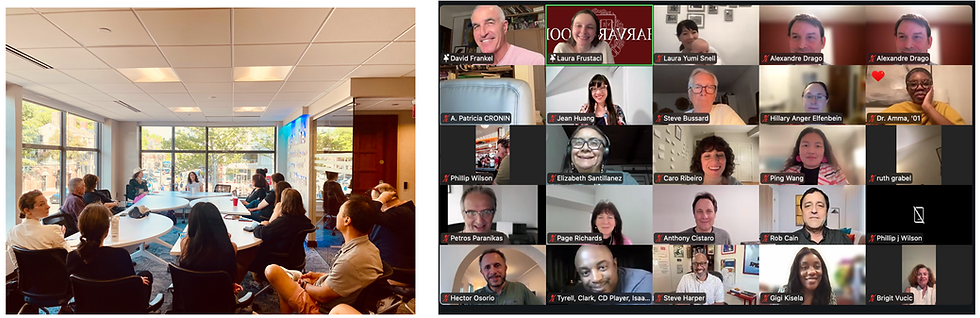
Last Month at Harvardwood, we talked Making of THE DEVIL WEARS PRADA 2 with Director David Frankel AB '81, met with our writing groups, and more!
Want to submit your success(es) to Harvardwood HIGHLIGHTS? Do so by posting here!
Become a Harvardwood member! We work hard to create programming that you, the membership, would like to be engaged with. Please consider joining Harvardwood and becoming an active member of our arts, media, and entertainment community!
DISCLAIMER
Harvardwood does not represent or endorse the accuracy or reliability of any of the information, content or advertisements (collectively "Materials") contained on, distributed through, or linked, downloaded or accessed from any of the services contained in this e-mail. You hereby acknowledge that any reliance upon any Materials shall be at your sole risk. The materials are provided by Harvardwood on an "AS IS" basis, and Harvardwood expressly disclaims any and all warranties, express or implied.


Me parece interesante que los resultados puedan mantenerse como una referencia histórica. Los numeros ganadores de cada jornada permiten consultar datos anteriores y encontrar información concreta cuando sea necesario.
mình có lần lướt đọc mấy trao đổi trên mạng شيخ روحاني thì thấy nhắc nên cũng tò mò mở ra xem thử cho biết. mình không tìm hiểu sâu chỉ xem qua trong thời gian ngắn để quan sát bố cục cách sắp xếp جلب الحبيب các mục và trình bày nội جلب الحبيب dung tổng thể. cảm giác là các phần được trình bày khá gọn, các hurentest berlin mục rõ ràng Huren Berlin nên đọc lướt cũng không bị rối với mình như vậy là đủ để nắm tin cơ bản rồi. جلب الحبيب
👍
Birthday wishes for your brother can be written for social media, but adding something personal helps the post feel more genuine and less like a generic caption.
I think having basic information in one place makes any online platform easier to understand. The Shree Win Games search is useful for people who want to learn about access and available options. Before spending time on Shree Win Games, it is sensible to check the registration requirements and understand how the platform works.
Me pareció interesante la información porque permite comprobar fácilmente los resultados publicados. Después de un sorteo, conocer los numeros ganadores resulta especialmente útil, y tenerlos acompañados de otros detalles facilita una revisión completa. Además, la organización del contenido ayuda a encontrar rápidamente los datos que se necesitan.